联系我们

联系我们

我们为客户提供优质的产品并提供优质的服务
如果您想给我们留言,请 联系我们

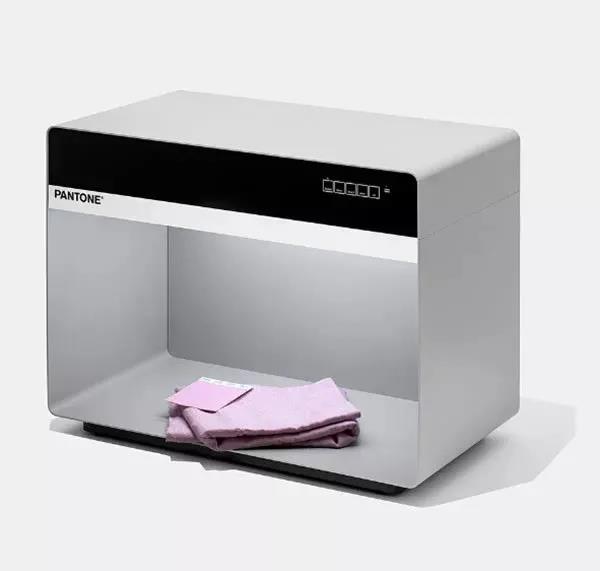
【Printing and Dyeing Learning and Exchange】It is learned that the international standard light source box is divided into two types: domestic light source box and imported light source color comparison box. The imported light source box is expensive, with high accuracy of calibration, mainly for large enterprises and enterprises with strict color requirements. The domestic standard color comparison box is cheap in price and suitable for most small enterprises. Because,For printing and dyeing plants, choosing the source of light is a very important thing!Let's look at the following analysis: A light source:Color temperature of 2845K, equivalent to the light radiated by an incandescent lamp at 2800K. B light source:The related color temperature is 4800K, which is equivalent to the sunlight at noon. C light source:The related color temperature is 6700K, which is equivalent to the natural light of the day, it has more blue components. D65 light source:the related color temperature is 6500K, which is equivalent to the average illumination of the day, in recent years, it is often used as the standard light source for color television. E light source:Also known as the equal energy white light, i.e., P(l )= constant, it is a hypothetical light source that does not actually exist. It is used purely to simplify the calculations in colorimetry, and its correlated color temperature is 550K. F seriesLuminous bodies represent a variety of types of fluorescent illumination. The textile printing and dyeing industry, the use of color matching is ***more is the color matching light box, the method of use is improper, resulting in users to appear in the color matching color light deviation,How to make different observers observe the color light consistent under the light box? So we need to use the color light box correctly according to the standard, which can be started from 9 aspects. 1 Observation angle Zero degree light source, 45 degree observation (0 °-45 °) i.e. the light source is incident on the sample at zero degree (vertical) and the observer observes the sample from 45 degree. Light source, 45 °斜台 45 degree light source, zero degree observation (0 °-45 °), in this arrangement a specific 45 degree斜台 (45 angle table) must be used to direct the light source at 45 degrees onto the sample, and the observer views the sample from zero degrees (vertical). 2 45° light source detection sample placement position Also, ***it is important not to overlap the items when comparing the colors of two or more items***, ***i.e.***, place them side by side in the same box for comparison. 3 Light box maintenance A perfect maintenance plan is needed to ensure that the light box remains in standard condition for a long time: 1. Be careful when using it and do not stain the inner wall of the light box; 2. If there are stains or paint peeling, personnel should be sent to correct or replace the inner wall panels immediately, and it is necessary to regularly check the use or brightness of the tubes, etc. 4 Requirements for environmental factors during the execution of the color 5 Have the function of testing the color-matching effect. 6 Requirements for changing the light source Based on the daily life experience, in our eyes, it is like having a register, when the color changes in an extremely short time, we can clearly feel it. Therefore, when observing the same color with different spectra, if we want to change the light source, it must be completed in an instant, and it is absolutely not allowed to be like the ordinary lighting tubes we use, which will shine after flashing, because this will stimulate the eyes and affect the evaluation results. 7 Record the time the standard tubes have been used All standard color matching light sources are also produced by tubes or lamps, and the manufacturers will also list the quality of their products within acceptable tolerances for a period of time. Therefore, an accurate time recorder is indispensable. These tubes are usually replaced if used for more than 2000 hours or one year. 8 Ultraviolet light source 9 The position of the tubes Other matters: The placement of the test samples. Regardless of which color inspection method is used, it is necessary to ensure that the test samples are placed as close as possible to the center of the color comparison box to minimize the influence of other light sources in the room. Additionally, it is **ABSOLUTELY** important to avoid overlapping items when comparing the colors of two or more objects, instead, they should be placed side by side in the color comparison box for comparison. After inspecting the samples with the color comparison box, it is necessary to press the ON/OFF key, and if not in use for a long time, the power switch of the color comparison box should be turned off. 1. No miscellaneous items are allowed to be placed inside the color light box to avoid damaging the inner wall's neutral gray, which could lead to color matching errors. 2. Do not start the tube too frequently, otherwise it will affect the life of the tube. 3. The distribution of various light sources within the body must be installed according to the "Light Tube Distribution Map" to obtain a uniform and sufficient light source. 4. Do not place heat-retaining materials on the top of the light box to allow the heat generated by the electronic ballast to be dissipated in time, extending its life. 5. Check whether the power supply is live or check whether the fuse below the power supply socket of the body is damaged, if the start button does not respond when the power supply is connected. 6. If the tube flickers, please check whether the tube is properly installed or check whether the electronic ballast is stable. The color box needs maintenance, especially the imported color box, which can cost 50,000 or 100,000. Only with proper daily maintenance can the color box remain in standard condition for a long time. For example, when using the color box daily, be careful not to stain the inner wall of the color box. If there are any stains or paint peeling, *** should send personnel to correct or replace the inner wall panel in time. Check the usage time or brightness of the tubes inside the color box from time to time. D林智制 . Metal hidden pull European Union Trademark Registration Authorization US registered trademark authorization (Metal hidden pull, metal invisible) full coverage of the 27 EU countries Russian patent authorization Indian patent authorization Japan patent authorization Australian patent authorization Korean patent authorization China Hong Kong patent authorization China Taiwan patent authorization China patent full coverage DL Innovation creates; steady and far-reaching steps. Taobao sample direct: https://shop541867299.taobao.com/?spm=2013.1.w5001-21577206546.2.68ba6a51sT7aG2&scene=taobao_shop Service hotline consultation:18661282826
The standard light source color box is usually a combination of multiple light sources,helping users to simulate sunlight with D65, D50, and simulating the lighting of the store display hall with TL84, CWF, U30,as well as home lighting F, INCA, horizontal sunlight HORIZON, ultraviolet lamp UV, etc., each light source corresponds to different parameters.Source name Color temperature (K) Tone RGB Please note A 2856 Incandescent lamp/tungsten B 4874 Midday sun shines directly C 6774 Average/North Sky Daylight D50 5003 Light on the horizon D55 5503 Morning/afternoon sunshine D65 6504 Midday Sunlight: Television, sRGB Color Space D75 7504 Daylight in the northern sky E 5454 Equal energy F1 6430 Sunlight fluorescence F2 4230 Cool white fluorescence F3 3450 White fluorescence F4 2940 Warm white fluorescence F5 6350 Sunlight fluorescence F6 4150 Lite white fluorescence F7 6500 D65 Simulator, Daylight Simulator F8 5000 D50 Simulator, Forest City F40 Design 50 F9 4150 Cool white luxury glow F10 5000 Philips TL85, Ultralume 50 Season 4000 Philips TL84, Ultralume 40 F12 3000 Philips TL83, Ultralume 30 Color temperature Luminous color Feeling <3000K Warm (with red white) Solid, warm 3000-5000K Middle (white) Satisfactory >5000K Cool type (white with blue) Cold
Some people think that the preference for color temperature is individual, which is related to the scenery we see in our daily life, for example, people near the equator, the average color temperature of the scenery they see every day is 11000K (8000K (dusk) ~ 17000K (noon)), so they prefer high color temperature (looking more realistic), on the contrary, people in higher latitudes (average color temperature is about 6000K) prefer low color temperature (5600K or 6500K), that is to say, if you use a high color temperature TV to show the scenery of the Arctic, it will look blue; on the contrary, if you use a low color temperature TV to watch the subtropical scenery, you will feel a bit red.